
Morehouse Projected Versus Actual Release
A projected release date is the custodian’s current calculation under the sentence, jail credit, earned credit, and controlling law. It may also be called scheduled or tentative. The actual release date is created after an authorized custody event takes place. These two dates answer different questions. One forecasts when release may occur. The other records when the person actually left that custodian.
Pretrial status changes the inquiry. A person held while a Morehouse Parish case is pending usually has no sentence-based projected date. Departure may follow bond processing, dismissal, a time-served order, or another judicial event. A bond authorization does not prove that jail processing finished, and a dismissal may coexist with another hold. Court minutes explain the legal event, while the MPSO release entry establishes physical departure.
- Projected date
- The custodian’s current sentence-based estimate, if one is calculated.
- Actual release
- The documented event showing departure from a specific custodian.
- Detainer
- A request or hold from another authority that can prevent community release.
- Jail credit
- Time a court credits toward a sentence for qualifying prior custody.
Find a Morehouse Projected Date
Begin by identifying who controls the sentence. The Morehouse Parish Jail and Jail Annex hold local cases. Morehouse Detention Center can hold both local detainees and DPS&C offenders, while the Transitional Work Program remains a custody placement. A person can leave a Collinston building and remain a state prisoner elsewhere. Use the booking number, sentencing court, and DPS&C number to separate a facility move from a sentence release.
- Determine whether the person is pretrial, serving a parish sentence, or serving a DPS&C sentence. Obtain the sentencing minutes or order when a sentence exists.
- For a state-sentenced person, call the DPS&C automated locator at 225-383-4580. Use the official field name “projected release date, if applicable.”
- If no state date is returned, allow for delayed or incomplete court paperwork and call the time-computation unit at 225-342-0799.
- For a parish sentence, ask the responsible Morehouse facility or records unit for the current projected date. The sheriff or superintendent applies the governing parish-sentence rules.
- Compare the sentence, offense date, jail-credit notation, and any consecutive or concurrent terms. Do not calculate or publish a named person’s date independently.
- After departure, obtain the actual MPSO release entry or DPS&C discharge date. Keep that event separate from the earlier projection.
The DPS&C inmate information source documents the search fields, state coverage, update statement, and automated projected-date route.
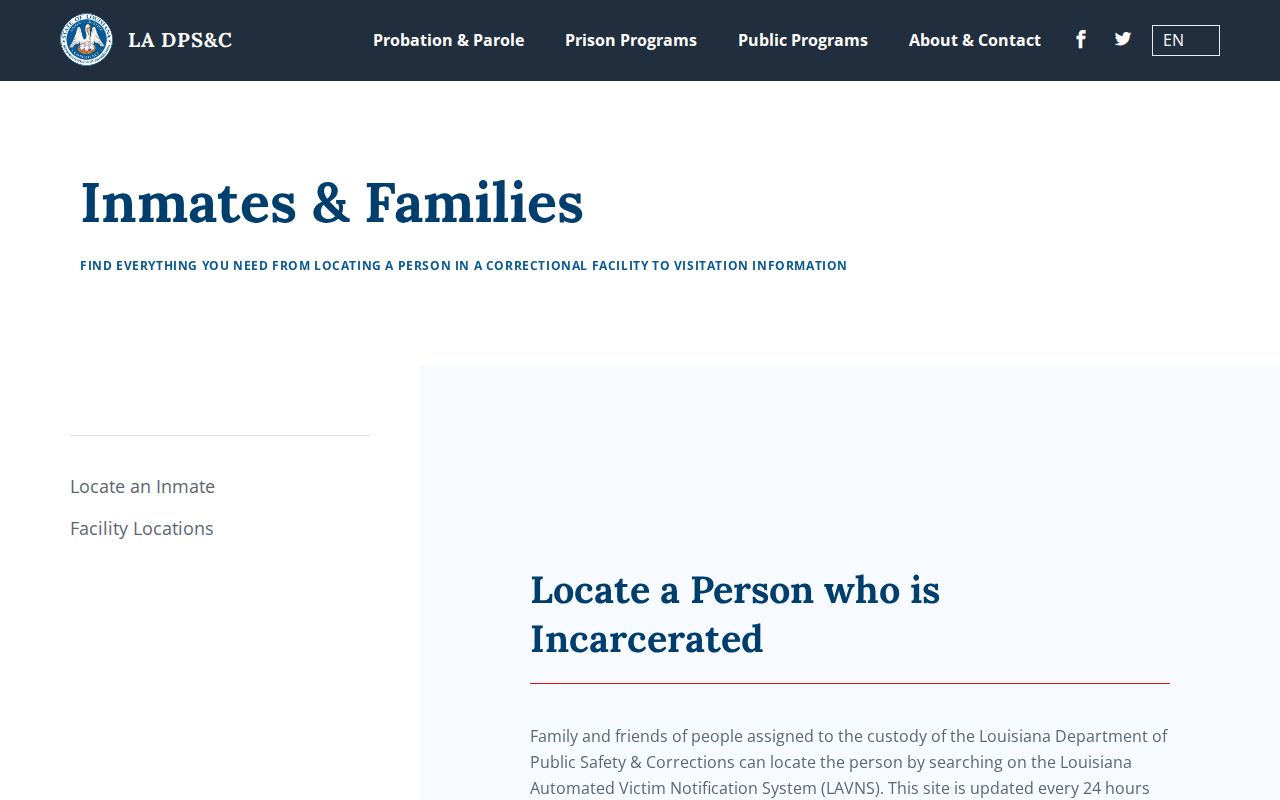
The captured state page helps distinguish the automated date output from a local MPSO release record or court disposition.
Morehouse Release Date Computation
A valid computation starts with the court’s sentence. The custodian also needs the offense date, whether the term is with or without hard labor, presentence jail credit, and whether multiple terms run at the same time or one after another. Then the correct credit law and exclusions must be applied. Missing or corrected sentencing papers can change the result. The court defines the term, but the sheriff or DPS&C performs the official custody calculation.
Good time is a statutory reduction earned by an eligible person and subject to forfeiture. It is not the same as jail credit. Parole eligibility is another separate date. A parole panel can grant or deny conditional release, while good-time rules affect the custodian’s computed term. A projected date can exist beside a parole eligibility date, and neither one proves actual release.
For a completed parish sentence, obtain the Morehouse sentencing minutes and determine which authority held the person. If the person was physically at Morehouse Detention Center but legally in state custody, use DPS&C computation. If MPSO controlled the parish sentence, ask the facility for its date. Once the person leaves, request the actual release entry and identify whether the disposition was full completion, good-time supervision, parole, probation, or transfer.
Note: “Time served” can authorize release, but another warrant or detainer may still prevent departure into the community.
Morehouse Good-Time Offense-Date Fork
Louisiana has a sharp offense-date split. For offenses committed before August 1, 2024, R.S. 15:571.3 contains several legacy rates and exclusions. Some eligible parish prisoners sentenced without hard labor could earn thirty days for each thirty actual days. A first crime-of-violence cohort used three days for every seventeen actual days, while a second violence conviction was excluded. Certain state nonviolent cohorts used still other rates. Habitual, sex-offense, repeated-violence, and other limits apply.
For offenses committed on or after August 1, 2024, R.S. 15:571.3.1 permits an eligible felony prisoner in parish or DPS&C custody to earn up to a maximum fifteen-percent diminution. Sex-offense and habitual-offender exclusions apply. Presentence time under Article 880 does not itself earn this good time, credits can be forfeited, and other authorized credits may affect the result.
That newer maximum is often restated as serving about eighty-five percent under the good-time component. It is not a universal truth-in-sentencing rule for every Morehouse Parish inmate. Older cases retain their own scheme, eligibility matters, and other sentence rules still apply. Always identify the offense date and controlling statute before interpreting the official projection.
Why Morehouse Release Dates Change
Projected dates are based on the best official information available at that point. A change may correct the record rather than represent a new punishment or benefit. Record the field label and date each time the system is checked. If the change cannot be explained, send computation questions to DPS&C’s time-computation unit for a state sentence or to the responsible Morehouse custodian for a parish sentence.
| Factor | Possible effect | Best source |
|---|---|---|
| Sentencing papers | New or corrected documents can alter the base term | Fourth JDC order and custodian |
| Jail credit | A corrected credit award can move the calculation | Court order and computation unit |
| Concurrent or consecutive terms | Changes whether terms overlap or follow each other | Sentencing order |
| Good-time credit | Earning, forfeiture, or restoration changes diminution | MPSO or DPS&C |
| Detainer or another sentence | May prevent community release on the projected day | Holding and destination agencies |
| Parole action | Can create a separate conditional-release path | Committee on Parole and DPS&C |
| Applicable law | The offense-date cohort controls credit rules | Statute and computation authority |
A parole grant deserves special care. The decision may come before plan approval, detainer resolution, paperwork, or physical departure. State the hearing, decision, eligibility, projected, and actual dates separately. A transfer also changes location without ending the sentence.
Morehouse Parish and State Dates
The custody map is crucial in Morehouse Parish. A sentenced person at the downtown Jail may be serving a parish term controlled locally. Another person at Morehouse Detention Center may be a DPS&C offender housed in a local building. A TWP participant remains in custody even while working or taking transition programming. The same street location cannot establish which agency computes release.
For a parish sentence, request the projected date from the responsible facility and pair it with the Fourth Judicial District Court sentence. For state custody, use the DPS&C number, automated locator, time-computation unit, and public discharge-date request. If the state locator reports the Monroe Probation and Parole District, the person may be in a supervised community phase rather than fully discharged.
The Morehouse Parish release record path can help identify the booking, disposition, custodian, and actual release event. Use it when the date question begins with a roster disappearance rather than a known sentence.
Confirm Morehouse Actual Release
Use VINELink as a notice and verification aid, not as the sole release certificate. Search the exact person, compare the agency and identifiers, and preserve the event date and last-update marker. The MPSO-linked live roster can refresh more often than the statewide state-data statement, so mismatched screens may reflect different feeds or timing. Ask the custodian to resolve urgent conflicts.
For an expected parish release, call the Morehouse facility and request the completed release entry after departure. Ask for the date, time, release type, and destination agency if the person was transferred. For a state sentence, request the discharge date under R.S. 15:574.12(G)(1)(a). Protected offender material can be withheld, but the statute identifies the discharge date as publicly requestable information.
The VINELink Release Check explains the matching and alert steps for one Morehouse Parish person. A notice should trigger the final agency check. It should not be converted into a promise that release will occur on the projected day.
Gather Morehouse Release Calculation Records
A useful date inquiry gives the computation authority the records it needs. Ask the Morehouse Clerk for the docket sheet, sentencing minutes, sentencing order, commitment, jail-credit notation, and later orders that amend or clarify the term. Record whether the sentence is with or without hard labor. Note the offense date and every count. If several terms exist, the order should say whether they run concurrently, at the same time, or consecutively, one after another.
For DPS&C, provide the full name, date of birth, DPS&C number, sentencing court, and approximate sentence period. The automated locator handles basic projected-date output. The time-computation unit handles questions about the calculation. The public-records office can receive a request for the eventual discharge date, but it should not be asked to create a new calculation or disclose confidential prison material. Different channels have different roles.
For a parish sentence, identify the exact Morehouse site and ask which office has statutory computation control. The Jail, Annex, Detention Center, and Transitional Work Program are not interchangeable. A local file may show an MPSO booking while a DPS&C number proves state sentence authority. Ask for the existing projected-date field, then request the completed release entry after departure. If the disposition says transfer, follow the named destination instead of recording it as community release.
This record set also helps explain changes. A corrected jail-credit order can move the date. A newly received commitment can supply a term that was missing. An unresolved consecutive sentence or detainer can prevent departure even when one term reaches its projection. Preserve each version and its source date. The final timeline should show what the court ordered, what the custodian calculated, and when the holding agency actually released or transferred the person.